Friday, October 23, 2020

New normal: Best options for a face mask


Wearing face masks have become the norm for billions of people around the world. While there are many masks available in the market along with DIY ones, public health and safety experts like Martin Lloyd Sanders, Ph.D., advise the public to choose high-quality materials that will provide them with the best protection. Here are some expert-approved materials for the daily face mask: 

Image source: Theguardian.com

Cotton quilting fabric

For those who would rather make their masks at home, experts suggest using two layers of quilting fabric. Those who would like to add an extra layer in between the fabric can use a coffee filter, tissue paper, or a thin cloth that they can dispose of before washing the mask. These fabrics can be taken from old clothes or blankets. To make sure that they become useful, Martin Lloyd Sanders, Ph.D. says that the fit and the coverage should be right.

Neoprene

This material is lightweight and stretchable. Neoprene also helps in protecting the face from respiratory droplets. Many neoprene masks are also made of two layers with a slot that can fit filters. Like the cotton type, these can also be washed and reused after each use. 

Image source: Unsplash.com

Surgical and N95 masks

These medical grade masks are usually reserved for health workers and medical frontliners. However, in some places, these masks have already been mass-produced for the public to use. According to public health experts, the materials used for these masks are proven to be effective in shielding the face from respiratory droplets. While use of these masks are convenient, Martin Lloyd Sanders, Ph.D., reminds the public to properly dispose of their used masks by putting them in a closed bin. These masks should be discarded after two to six hours of use.

Captain Martin Lloyd Sanders, Ph.D., has rendered over 10 years of service in occupational safety and health. For more articles like this, check out this page.

Disclaimer: This site was prepared by Martin L. Sanders in his personal capacity. The opinions expressed are the author's own and do not reflect the views of the USPHS, the Department of Health and Human Services, or the United States government.

Monday, September 28, 2020

A brief guide to occupational hazard recognition


While the threat of COVID-19 remains real and as dangerous as ever, industries are beginning to reopen, requiring a percentage of employees to report to the workplace. Employers ought to know how virulent the virus has become, how it spreads, and how it can affect individuals differently. 

Image source: ethicaltrade.org


Hazard recognition demands employers to know the classification of risk exposure to COVID-19. According to Martin Lloyd Sanders, employees who have lower risk exposure include those that work remotely; work at the office but do not have close contact with others in the office, in transit, or in their community; healthcare workers conducting telemedicine; long-distance drivers; and manufacturing and industrial workers who practice social distancing and basic safety and health protocols. Even with lower risk of exposure to the virus, diligence in practicing safety and prevention measures is encouraged. 

Image source: ohsonline.com

Employees whose work requires them to come in contact with clients, customers, and co-workers have medium risk of catching the dreaded virus. Airline, school, government, environment, and retail workers belong to this category. Medical transport, healthcare delivery, and mortuary workers have high risk of exposure to the virus. When reporting to work, employees in this classification require proper personal protection equipment.

Martin Lloyd Sanders says that workers with very high exposure risk include frontline healthcare workers performing cough induction procedures, intubation, bronchoscopies, dental procedures, and invasive specimen collection on patients suspected or known to be infected with the virus. Employers must diligently remind and encourage sick employees to stay home. Daily virtual or in-person health checks are a must to ensure the safety of employees.

Martin Lloyd Sanders has been deeply involved in biosafety and biosecurity issues both in the US and abroad. His specialization is in biological safety, field medical operations, biosecurity, occupational safety and health, infectious disease epidemiology, environmental health services, and occupational health and wellness programs. To read more from Martin Lloyd Sanders, head over to this blog.

Disclaimer: This site was prepared by Martin L. Sanders in his personal capacity. The opinions expressed are the author's own and do not reflect the views of the USPHS, the Department of Health and Human Services, or the United States government.

Friday, August 28, 2020

The benefits of having an environmental policy in your company


Most companies today haven't considered putting an environmental policy in place. Perhaps, this might only be a case of a lack of information, which Martin Lloyd Sanders graciously shares today. 

Image source: ust-global.com


1. Energy savings
Little do people know that with environmental policy, it is possible to save on energy too, along with a company's expenses for electricity. It has always been in the interest of environmentalism to find more technologies that allow for less use of energy, and make them more widespread throughout the world.

2. Paperless culture
In a move to lessen dependency on trees for paper, the paperless culture caught on early in some corporate practices. Going paperless as part of environmental policy could also be an excellent opportunity for a company to migrate operations to the internet and other forms of documentation over the network. 

Image source: slideshare.net


3. Compliance
If having a corporate environmental policy today is still the exception rather than the rule, evolution has it that this wouldn't be for long, as Martin Lloyd Sanders projects. Governments all over the world will take the first steps toward making this a blanket policy soon enough, which means that today, companies would be wise to put an environmental policy in place as an early practice.

4. Good press
Nothing builds a company's reputation like a good environmental standing does. With an environmental policy, owners can actually have a hand in creating a corporate culture that employees can be proud of. It's only a matter of time before mainstream media and social media will pick this up, Martin Lloyd Sanders shares.

Captain Martin Lloyd Sanders, Ph.D., has been deeply involved in biosafety and biosecurity issues both in the U.S. and abroad. He is an expert in biological safety, field medical operations, biosecurity, occupational safety and health, infectious disease epidemiology, environmental health services, and occupational health and wellness programs. For more reads like this, click here.

Disclaimer: This site was prepared by Martin L. Sanders in his personal capacity. The opinions expressed are the author's own and do not reflect the views of the USPHS, the Department of Health and Human Services, or the United States government.

Wednesday, July 22, 2020

Safest and worst places to go to during the coronavirus pandemic


It is crucial for people to understand how quick coronavirus can spread outside the home. While some locales have yet to enforce lockdowns, some have already made attempts to reopen businesses to the public. More often than not, this has resulted in a spike in cases, except for places which have handled the situation from the beginning. Once an epicenter for coronavirus, New York is now safely reopening, thanks to preventive measures that have slowed down the spread of the virus. Public safety expert Martin Lloyd Sanders claim that people should know places which are safe and those which have a high chance of having COVID-19. 

Image source: hospitalityinsights.ehl.edu

Bars A bar is probably the last place you want to be in during this pandemic. It’s enclosed with often poor ventilation, the place can get crowded, and it’s often filled with people who talk in close quarters. Even though the staff may do their best to disinfect seats, tables, and bar stools, the virus can easily remain airborne, ready to infect other people.

Restaurants
Restaurants are generally roomier compared to bars. And if proper social distancing etiquette is followed, only about 25% occupancy should be allowed. People are only able to remove their face masks when eating and conversations, which could allow the spray of viral components are limited to a small area. If you are craving for restaurant food, it is still best to have it for takeaway. 

Image source: kgou.org

Public parks
Public parks are generally safe, unless there is an unusually large amount of people congregating in the area. There isn’t really much surface area for the virus to cling on to and people can easily follow social distancing rules in these open spaces, making them some of the safest public areas you can visit during the pandemic, according to Martin Lloyd Sanders. Just be sure, to wash your hands and bathe as soon as you get home.

Captain Martin Lloyd Sanders, Ph.D., obtained his degree in zoology at the University of California and his doctorate from the Department of Immunology and Infectious Diseases at the Johns Hopkins University School of Hygiene and Public Health. Visit this website for more updates on the current pandemic situation.

Disclaimer: This site was prepared by Martin Sanders in his personal capacity. The opinions expressed are the author's own and do not reflect the views of the USPHS, the Department of Health and Human Services, or the United States government.

Monday, June 22, 2020

Starting a conversation with kids about COVID-19


The world is drawn to a halt as people are ordered to stay home to prevent the coronavirus from spreading further. Children at home might be wondering why they're being homeschooled, and little leagues are canceled. Public health professional Capt. Martin Lloyd Sanders shares his thoughts on helping kids understand the global health crisis. 

Image source: nm.org


Whenever explaining COVID-19 to children, adults must be calm and proactive. It's the job of an adult to help a child understand their role in the fight against the dreaded disease. An adult can let the kid know that it's a possibility that at some point, one or all of them might feel symptoms similar to the flu or common cold. They must reassure the child that they don't have to feel terrified about that likelihood.

It's integral for an adult to arm themselves with facts from credible sources before starting a conversation about COVID-19 with children. Institutions such as the Centers for Disease Control and Prevention and the World Health Organization must be on top of the list of resources. Kids are likely to talk and listen during dinnertime. Start the conservation by asking about their thoughts on the pandemic. Be sure to listen to their concerns, too. 

Image source: goodhousekeeping.com


Parents must answer their children's questions about the pandemic as truthful and as simple as possible. Capt. Martin Lloyd Sanders encourages parents to regularly talk to their children to know how they are coping and teach them about the preventive measures the family has to take to stay healthy and safe from the virus.

Captain Martin Lloyd Sanders, Ph.D., CSP, has more than a decade of service in the occupational safety and health sector. He possesses extensive experience in biological defense activities and infectious disease outbreak investigation. Visit this blog for similar updates.

Disclaimer: This site was prepared by Martin L. Sanders in his personal capacity. The opinions expressed are the author's own and do not reflect the views of the USPHS, the Department of Health and Human Services, or the United States government.

Wednesday, May 20, 2020

Emergency planning strategies for older adults and caregivers

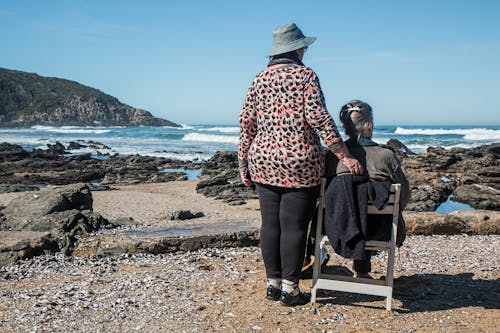
Natural calamities, pandemics, and other emergencies can leave people in distress. During these trying times, older adults are some of the most vulnerable members of the community. Martin Lloyd Sanders, Ph.D., CSP, suggests that before these situations happen, older adults and their caregivers must have an emergency plan they can easily execute. Below are some strategies that can help them stay safe.
Image source: Pixabay.com

Image source: Pexels.com

Have a list of support and contacts

One must have a list of emergency contacts such as one's immediate family, neighbors, and healthcare providers that can easily be contacted in times of emergencies. It would also be useful to have out-of-town contacts in case something happens when the person is away from their home. This list of contacts should be easy to find. For those living alone or in a senior care home, it might be helpful to coordinate with other staff.

Place mobility aids, visual aids, and essential medical equipment in an accessible place

Hearing aids, walkers, wheelchairs, canes, eyeglasses, and other essential equipment should be within a person's reach. When the situation calls for evacuation, older adults and their caregivers will not have difficulties finding these necessities. Having these assistive tools will allow them to move efficiently.

Prepare an emergency kit

Hygiene items, flashlight, radio, cell phones, food and water, first aid kit, change of clothes, undergarments, blankets, copies of essential documents, and medicine should be in a person's emergency kit. When one needs to leave their senior home or residence, having such a kit will ensure that they'll have their necessities even for a few days.

Captain Martin Lloyd Sanders, Ph.D., CSP, is an officer in the Commissioned Corps of the U.S. Public Health Service and has rendered over 10 years of service in occupational safety and health. For more articles like this, check out this page.

Disclaimer: This site was prepared by Martin L. Sanders in his personal capacity. The opinions expressed are the author's own and do not reflect the views of the USPHS, the Department of Health and Human Services, or the United States government.

Tuesday, April 28, 2020

Occupational health and safety: The fisherman

In many parts of the world and the U.S., fishing is not seen as a hobby; it is a job. Some fishermen rely on their catch for their daily income. And those who have had fishing as an occupation long enough know that it is not without its dangers, occupational health and safety expert Martin Lloyd Sanders explains.
Image source: Spoutfire.com

Image source: Cabelas.com
The obvious threat to fishermen is the weather. Among all workers in the U.S., fishermen are more affected by the weather than almost anybody else. Some employers have groups of fishermen out there on a single vessel to help, which is much safer than a single fisherman independently going about his daily routine.

It is also important to note that being on the boat itself presents several safety hazards. From slipping to being thrown overboard to having loosely tied equipment tumbling around, being a fisherman is by no means a safe job. It is a good thing there are safety equipment that fishermen are required to have with them at all times, such as life jackets and non-slip boots.

Martin Lloyd Sanders also mentions that fishermen are at the mercy of the elements, and not just with the dangers of the weather. Fishermen are exposed to all kinds of temperature, which can weaken their immune system and make them susceptible to the flu. This is why in every boat, first aid kits and basic medicine should always be available.

Captain Martin Lloyd Sanders, Ph.D., CSP, is an expert in biological safety, field medical operations, biosecurity, occupational safety and health, infectious disease epidemiology, and environmental health services. For related posts, visit this blog.

Disclaimer: This site was prepared by Martin L. Sanders in his personal capacity. The opinions expressed are the author's own and do not reflect the views of the USPHS, the Department of Health and Human Services, or the United States government.