Friday, August 28, 2020

The benefits of having an environmental policy in your company


Most companies today haven't considered putting an environmental policy in place. Perhaps, this might only be a case of a lack of information, which Martin Lloyd Sanders graciously shares today. 

Image source: ust-global.com


1. Energy savings
Little do people know that with environmental policy, it is possible to save on energy too, along with a company's expenses for electricity. It has always been in the interest of environmentalism to find more technologies that allow for less use of energy, and make them more widespread throughout the world.

2. Paperless culture
In a move to lessen dependency on trees for paper, the paperless culture caught on early in some corporate practices. Going paperless as part of environmental policy could also be an excellent opportunity for a company to migrate operations to the internet and other forms of documentation over the network. 

Image source: slideshare.net


3. Compliance
If having a corporate environmental policy today is still the exception rather than the rule, evolution has it that this wouldn't be for long, as Martin Lloyd Sanders projects. Governments all over the world will take the first steps toward making this a blanket policy soon enough, which means that today, companies would be wise to put an environmental policy in place as an early practice.

4. Good press
Nothing builds a company's reputation like a good environmental standing does. With an environmental policy, owners can actually have a hand in creating a corporate culture that employees can be proud of. It's only a matter of time before mainstream media and social media will pick this up, Martin Lloyd Sanders shares.

Captain Martin Lloyd Sanders, Ph.D., has been deeply involved in biosafety and biosecurity issues both in the U.S. and abroad. He is an expert in biological safety, field medical operations, biosecurity, occupational safety and health, infectious disease epidemiology, environmental health services, and occupational health and wellness programs. For more reads like this, click here.

Disclaimer: This site was prepared by Martin L. Sanders in his personal capacity. The opinions expressed are the author's own and do not reflect the views of the USPHS, the Department of Health and Human Services, or the United States government.

Wednesday, July 22, 2020

Safest and worst places to go to during the coronavirus pandemic


It is crucial for people to understand how quick coronavirus can spread outside the home. While some locales have yet to enforce lockdowns, some have already made attempts to reopen businesses to the public. More often than not, this has resulted in a spike in cases, except for places which have handled the situation from the beginning. Once an epicenter for coronavirus, New York is now safely reopening, thanks to preventive measures that have slowed down the spread of the virus. Public safety expert Martin Lloyd Sanders claim that people should know places which are safe and those which have a high chance of having COVID-19. 

Image source: hospitalityinsights.ehl.edu

Bars A bar is probably the last place you want to be in during this pandemic. It’s enclosed with often poor ventilation, the place can get crowded, and it’s often filled with people who talk in close quarters. Even though the staff may do their best to disinfect seats, tables, and bar stools, the virus can easily remain airborne, ready to infect other people.

Restaurants
Restaurants are generally roomier compared to bars. And if proper social distancing etiquette is followed, only about 25% occupancy should be allowed. People are only able to remove their face masks when eating and conversations, which could allow the spray of viral components are limited to a small area. If you are craving for restaurant food, it is still best to have it for takeaway. 

Image source: kgou.org

Public parks
Public parks are generally safe, unless there is an unusually large amount of people congregating in the area. There isn’t really much surface area for the virus to cling on to and people can easily follow social distancing rules in these open spaces, making them some of the safest public areas you can visit during the pandemic, according to Martin Lloyd Sanders. Just be sure, to wash your hands and bathe as soon as you get home.

Captain Martin Lloyd Sanders, Ph.D., obtained his degree in zoology at the University of California and his doctorate from the Department of Immunology and Infectious Diseases at the Johns Hopkins University School of Hygiene and Public Health. Visit this website for more updates on the current pandemic situation.

Disclaimer: This site was prepared by Martin Sanders in his personal capacity. The opinions expressed are the author's own and do not reflect the views of the USPHS, the Department of Health and Human Services, or the United States government.

Monday, June 22, 2020

Starting a conversation with kids about COVID-19


The world is drawn to a halt as people are ordered to stay home to prevent the coronavirus from spreading further. Children at home might be wondering why they're being homeschooled, and little leagues are canceled. Public health professional Capt. Martin Lloyd Sanders shares his thoughts on helping kids understand the global health crisis. 

Image source: nm.org


Whenever explaining COVID-19 to children, adults must be calm and proactive. It's the job of an adult to help a child understand their role in the fight against the dreaded disease. An adult can let the kid know that it's a possibility that at some point, one or all of them might feel symptoms similar to the flu or common cold. They must reassure the child that they don't have to feel terrified about that likelihood.

It's integral for an adult to arm themselves with facts from credible sources before starting a conversation about COVID-19 with children. Institutions such as the Centers for Disease Control and Prevention and the World Health Organization must be on top of the list of resources. Kids are likely to talk and listen during dinnertime. Start the conservation by asking about their thoughts on the pandemic. Be sure to listen to their concerns, too. 

Image source: goodhousekeeping.com


Parents must answer their children's questions about the pandemic as truthful and as simple as possible. Capt. Martin Lloyd Sanders encourages parents to regularly talk to their children to know how they are coping and teach them about the preventive measures the family has to take to stay healthy and safe from the virus.

Captain Martin Lloyd Sanders, Ph.D., CSP, has more than a decade of service in the occupational safety and health sector. He possesses extensive experience in biological defense activities and infectious disease outbreak investigation. Visit this blog for similar updates.

Disclaimer: This site was prepared by Martin L. Sanders in his personal capacity. The opinions expressed are the author's own and do not reflect the views of the USPHS, the Department of Health and Human Services, or the United States government.

Wednesday, May 20, 2020

Emergency planning strategies for older adults and caregivers

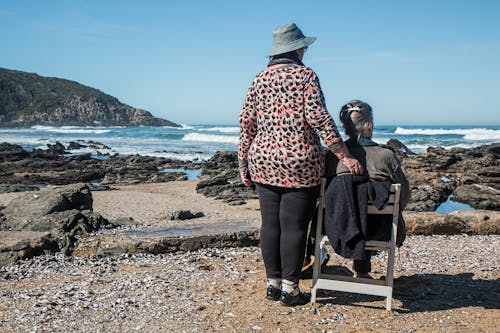
Natural calamities, pandemics, and other emergencies can leave people in distress. During these trying times, older adults are some of the most vulnerable members of the community. Martin Lloyd Sanders, Ph.D., CSP, suggests that before these situations happen, older adults and their caregivers must have an emergency plan they can easily execute. Below are some strategies that can help them stay safe.
Image source: Pixabay.com

Image source: Pexels.com

Have a list of support and contacts

One must have a list of emergency contacts such as one's immediate family, neighbors, and healthcare providers that can easily be contacted in times of emergencies. It would also be useful to have out-of-town contacts in case something happens when the person is away from their home. This list of contacts should be easy to find. For those living alone or in a senior care home, it might be helpful to coordinate with other staff.

Place mobility aids, visual aids, and essential medical equipment in an accessible place

Hearing aids, walkers, wheelchairs, canes, eyeglasses, and other essential equipment should be within a person's reach. When the situation calls for evacuation, older adults and their caregivers will not have difficulties finding these necessities. Having these assistive tools will allow them to move efficiently.

Prepare an emergency kit

Hygiene items, flashlight, radio, cell phones, food and water, first aid kit, change of clothes, undergarments, blankets, copies of essential documents, and medicine should be in a person's emergency kit. When one needs to leave their senior home or residence, having such a kit will ensure that they'll have their necessities even for a few days.

Captain Martin Lloyd Sanders, Ph.D., CSP, is an officer in the Commissioned Corps of the U.S. Public Health Service and has rendered over 10 years of service in occupational safety and health. For more articles like this, check out this page.

Disclaimer: This site was prepared by Martin L. Sanders in his personal capacity. The opinions expressed are the author's own and do not reflect the views of the USPHS, the Department of Health and Human Services, or the United States government.

Tuesday, April 28, 2020

Occupational health and safety: The fisherman

In many parts of the world and the U.S., fishing is not seen as a hobby; it is a job. Some fishermen rely on their catch for their daily income. And those who have had fishing as an occupation long enough know that it is not without its dangers, occupational health and safety expert Martin Lloyd Sanders explains.
Image source: Spoutfire.com

Image source: Cabelas.com
The obvious threat to fishermen is the weather. Among all workers in the U.S., fishermen are more affected by the weather than almost anybody else. Some employers have groups of fishermen out there on a single vessel to help, which is much safer than a single fisherman independently going about his daily routine.

It is also important to note that being on the boat itself presents several safety hazards. From slipping to being thrown overboard to having loosely tied equipment tumbling around, being a fisherman is by no means a safe job. It is a good thing there are safety equipment that fishermen are required to have with them at all times, such as life jackets and non-slip boots.

Martin Lloyd Sanders also mentions that fishermen are at the mercy of the elements, and not just with the dangers of the weather. Fishermen are exposed to all kinds of temperature, which can weaken their immune system and make them susceptible to the flu. This is why in every boat, first aid kits and basic medicine should always be available.

Captain Martin Lloyd Sanders, Ph.D., CSP, is an expert in biological safety, field medical operations, biosecurity, occupational safety and health, infectious disease epidemiology, and environmental health services. For related posts, visit this blog.

Disclaimer: This site was prepared by Martin L. Sanders in his personal capacity. The opinions expressed are the author's own and do not reflect the views of the USPHS, the Department of Health and Human Services, or the United States government.

Friday, March 27, 2020

Essential medicines that should always be in a first aid kit

Having a first aid kit at home, in the office, in the car, or even inside one's daily bag allows a person to prevent sickness and injuries fast. Public health and safety professional Martin Lloyd Sanders, Ph.D., CSP, shares the most important medicines that should always be inside your first aid kit.

Image source: timesnownews.com

Image source: timesnownews.com
Pain-relievers
Ibuprofen, paracetamol, and acetaminophen are some of the most common pain relievers one can easily stock up on. Some of these medications can also address the discomfort caused by cough, colds, and flu. These medications are necessary to prevent inflammation, fever, and body pain.

Antihistamine and autoinjectors
If the individual or someone in the family has a known allergy, it's always important to have extra tablets or epinephrine shots nearby. These medications can address simple to severe allergic reactions, bringing quick relief especially for those who experience symptoms such as itching and breathing difficulties.

Antacid
An upset stomach, indigestion, heartburn, and hyperacidity don't always require a trip to the emergency room. With the right medication, one can be relieved of the discomfort caused by these ailments.

Anti-diarrhea medication
This is important for those who are fond of camping or traveling. Since there's a high chance for outside food to be contaminated, it's best to have anti-diarrhea tablets in the kit to prevent pain and discomfort.

Ointment, creams, and lotions
According to Martin Lloyd Sanders, Ph.D., CSP, calamine lotion, hydrocortisone, antiseptic creams, and other topical medication should be in the first aid kit to protect irritated skin due to injuries, insect bites, and allergies.

Instead of not knowing where to get supplies when the need arises, it's best to keep an inventory of the items inside the first aid kit. Having a well-stocked kit will help people address sickness and injury quicker.

Captain Martin Lloyd Sanders, Ph.D., CSP, is an officer in the Commissioned Corps of the U.S. Public Health Service and has rendered over 10 years of service in occupational safety and health. For more articles like this, check out this blog.

Disclaimer: This site was prepared by Martin L. Sanders in his personal capacity. The opinions expressed are the author's own and do not reflect the views of the USPHS, the Department of Health and Human Services, or the United States government.
Tuesday, March 3, 2020

What to do during a flash flood

Image source: nbcnews.com
Over the past few years, the weather has become more and more unpredictable. As the world combats this climate crisis, there are now unique and old threats to public safety. A lot of places that weren’t prone to floods before are starting to get affected, and people need to know how to respond to these emergencies appropriately. Captain Martin Lloyd Sanders believes that knowing what to do during these emergencies can keep you safe. If you are caught in a flash flood, here is what you need to do.

If you live in a low and flood-prone area, tune in to your local weather or TV station and pay attention to the weather updates. Local officials will advise residents on what steps to take and inform people of any relevant weather activities.

If you are stuck inside a vehicle inside a flood and you notice that the water is starting to rise quickly, vacate your vehicle and seek higher ground. Regardless of how big or heavy your car is, it can easily get swept away by fast-moving water. The last thing you want to be in is inside a vehicle getting swept away into deeper parts of the flood.

Image source: public.wmo.int
If you are outside and the water starts to rise, stay away from the direction of the floodwater’s flow. Don’t force your way into a flood as it is possible to get hit by debris being carried by the fast-moving water.

Lastly, always have an emergency kit in your home at all times. Captain Martin Lloyd Sanders notes that an emergency kit should have at least a gallon of water per person, medication, toiletries, a power bank for your phones, extra cash, blankets, clothes, map of the area, and a list of emergency contact numbers.”

Captain Martin Lloyd Sanders, Ph.D., CSP, formerly held the position of Director for Safety, Environmental Compliance and Emergency Management in Federal Occupational Health (FOH/PSC). He has the task of overseeing department-wide safety, environmental compliance, and emergency response policy. For more reads on emergency procedures and public safety, visit this blog.

Disclaimer: This site was prepared by Martin L. Sanders in his personal capacity. The opinions expressed are the author's own and do not reflect the views of the USPHS, the Department of Health and Human Services, or the United States government.