Tuesday, March 3, 2020

What to do during a flash flood

Image source: nbcnews.com
Over the past few years, the weather has become more and more unpredictable. As the world combats this climate crisis, there are now unique and old threats to public safety. A lot of places that weren’t prone to floods before are starting to get affected, and people need to know how to respond to these emergencies appropriately. Captain Martin Lloyd Sanders believes that knowing what to do during these emergencies can keep you safe. If you are caught in a flash flood, here is what you need to do.

If you live in a low and flood-prone area, tune in to your local weather or TV station and pay attention to the weather updates. Local officials will advise residents on what steps to take and inform people of any relevant weather activities.

If you are stuck inside a vehicle inside a flood and you notice that the water is starting to rise quickly, vacate your vehicle and seek higher ground. Regardless of how big or heavy your car is, it can easily get swept away by fast-moving water. The last thing you want to be in is inside a vehicle getting swept away into deeper parts of the flood.

Image source: public.wmo.int
If you are outside and the water starts to rise, stay away from the direction of the floodwater’s flow. Don’t force your way into a flood as it is possible to get hit by debris being carried by the fast-moving water.

Lastly, always have an emergency kit in your home at all times. Captain Martin Lloyd Sanders notes that an emergency kit should have at least a gallon of water per person, medication, toiletries, a power bank for your phones, extra cash, blankets, clothes, map of the area, and a list of emergency contact numbers.”

Captain Martin Lloyd Sanders, Ph.D., CSP, formerly held the position of Director for Safety, Environmental Compliance and Emergency Management in Federal Occupational Health (FOH/PSC). He has the task of overseeing department-wide safety, environmental compliance, and emergency response policy. For more reads on emergency procedures and public safety, visit this blog.

Disclaimer: This site was prepared by Martin L. Sanders in his personal capacity. The opinions expressed are the author's own and do not reflect the views of the USPHS, the Department of Health and Human Services, or the United States government.

Wednesday, January 29, 2020

How to help a person overcome a panic attack in public

Image source: Bbc.co.uk
So many people suffer from panic attacks that occur unexpectedly. When in public, companions need to provide support for someone who might be experiencing an attack. Capt. Martin Lloyd Sanders, Ph.D., CSP, suggests these methods that will help a person recover from an episode.

Keep calm and do not leave the person

Those who suffer from panic attacks might cause others to believe that they need space while they wait for the symptoms to pass. However, it is better to have someone who will stay by their side, especially when the physical symptoms seem to be intense. When the companion is composed, they can offer help, medication, and even lead the person having an attack to take deep breaths until the panic subsides. Going to a quiet and hidden place will help the person regain composure.

Communicate with the person

A person going through a panic attack may not be able to think clearly, according to Capt. Martin Lloyd Sanders, Ph.D., CSP. Asking straightforward questions will help them say what they need. It might also be good to ask them about the cause of their attack. Sometimes, verbalizing what's on their mind might shift their perspective, causing them to recover from anxious, overpowering thoughts. Offering water or medication might just be exactly the help they need.

Image source: Today.com
Encourage positive thoughts

Aside from leading the person to monitor breathing to ease the symptoms of a panic attack, reassuring him or her with encouraging words will allow for a faster recovery. Letting them know that they are brave for riding it out will cause them to open about what triggered the experience. When speaking with them, it's important to inform them that though what they have gone through was intense, it was not dangerous.

Captain Martin Lloyd Sanders, Ph.D., CSP, is an officer in the Commissioned Corps of the U.S. Public Health Service and has rendered over 10 years of service in occupational safety and health. For more articles like this, check out this page.

Disclaimer: This site was prepared by Martin L. Sanders in his personal capacity. The opinions expressed are the author's own and do not reflect the views of the USPHS, the Department of Health and Human Services, or the United States government.

Tuesday, October 22, 2019

The importance of cleanliness in schools

Captain Martin Lloyd Sanders, Ph.D., CSP, is all about safety in the workplace. He believes that it should be a priority for everyone everywhere. He even shares his extensive knowledge via his blog series to help raise awareness of safety and security.

Capt. Sanders notes that one of the most overlooked issues regarding safety – cleanliness in schools. Schools are places where many young people are packed in rooms almost every day. Because of this, it’s easy for viruses to go around, making schools a potent breeding ground for illnesses.

One way to prevent, or at least lower the chances of the spread of disease in schools is to focus on making these establishments as clean as possible. Capt. Sanders explains that this is, of course, easier said than done. Unlike offices wherein employees are mostly adults who know how to follow the rules of sanitation, schools, especially elementary schools, are filled with children who are not too focused on keeping themselves clean.

Children love to play, as they should. Because of this, it’s the school’s responsibility to make sure that its facilities, areas where children mostly play are kept clean. When these places are sanitized, the risk of infection from bacteria and viruses is lowered.

Capt. Martin Lloyd Sanders understands that schools have budget concerns and may not be able to comply with strict sanitation, but he also believes that cleanliness should be a priority. After all, there may be no more important thing in the world than the health and safety of children.

Captain Martin Lloyd Sanders, Ph.D., CSP, is a multi-awarded scientist and a US Army veteran. He is an expert in biological safety, field medical operations, biosecurity, occupational safety and health, infectious disease epidemiology, environmental health services, and occupational health and wellness programs. Visit this page for more articles like this.

Disclaimer: This site was prepared by Martin L. Sanders in his personal capacity. The opinions expressed are the author's own and do not reflect the views of the USPHS, the Department of Health and Human Services, or the United States government.

Monday, July 22, 2019

What to do during an active shooting

The U.S. is the country with the highest rate of public shooting in the world. Public shooting has been reported in the news too often. According to Captain Martin Lloyd Sanders, an expert in public health, citizens should know how to react to such acts of violence. Here is what you should do if you are caught in an active shooting scenario.

There are a lot of things you can do, but what you can do is limited to your location and your distance from the shooter. If you are at a safe enough distance, you should call 911 and alert local law enforcement of the crime being committed. If you are at an advantageous position where you can see the shooter but the shooter can’t see you, stay on the line and keep giving law enforcement information on the shooter’s location and direction.

If you think you do not have time to call law enforcement due to your situation, evacuate immediately. If you know your surroundings, think of an escape route with plenty of cover and not wide open spaces. Leave your belongings if they will hinder your escape. And if you see wounded people in the location, do not attempt to move them unless you are trained to do so.

In the instance where evacuation is not an option, the best thing to do is to find a hiding place, one that is away from the shooter’s view. According to Martin Lloyd Sanders, the best place to hide is a location where the door can be locked, items can be used to barricade the entrance, and you also have other means of escaping like a window.

Captain Martin Lloyd Sanders, Ph.D., obtained his degree in zoology at the University of California and his doctorate from the Department of Immunology and Infectious Diseases at the Johns Hopkins University School of Hygiene and Public Health. To know more about Capt. Sanders, visit his profile here .


Disclaimer:  This site was prepared by Martin L. Sanders in his personal capacity. The opinions expressed are the author's own and do not reflect the views of the USPHS, the Department of Health and Human Services, or the United States government. 

Wednesday, July 25, 2018

More Important Tips In The Event Of a National Calamity

The city of Frederick in Maryland is a great place to live in. Ask its residents. It’s a peaceful place with a rich history and a vibrant culture. However, it’s had its share of calamities, with hail storms and flooding hitting the county recently.

Here are some tips for homeowners in the area, just in case they are confronted with natural disasters.

Bolting down

Bolting down the roofs, fortifying windows, and any points of entry can protect the home against hail. Installing secondary wooden covers for windows allows homeowners to cover glass windows and prevent them from shattering.

However, homeowners can go that extra mile and bolt down features inside the house, such as heavy pieces of furniture and refrigerators. That way, they can also be safe in case an earthquake hits. Just be sure that the bolts can easily be taken out if these fixtures need to be moved, in case of flooding.

 Speaking of flooding.

Switching off

For people living in low-lying places vulnerable to flooding, it’s important that homeowners have easy access to their circuit breakers if they need to shut it down. Almost always, in homes that get flooded, electricity is the first concern. Once the power is off, homeowners can take care of the rest of the things, such as moving appliances and furniture to the second floor.

Captain Martin Lloyd Sanders, Ph.D., is an officer in the Commissioned Corps of the U.S. Public Health Service and has rendered over 10 years of service in occupational safety and health. For more articles like this, check out this page.

Friday, July 20, 2018

Three Ways To Have Clean Water After a Natural Disaster

Natural disasters can usually lead to food and water shortage. Tap water sources can also be contaminated, especially after storms and flash floods. Here are some ways to get clean water when there's no available supply:

1. Boiling

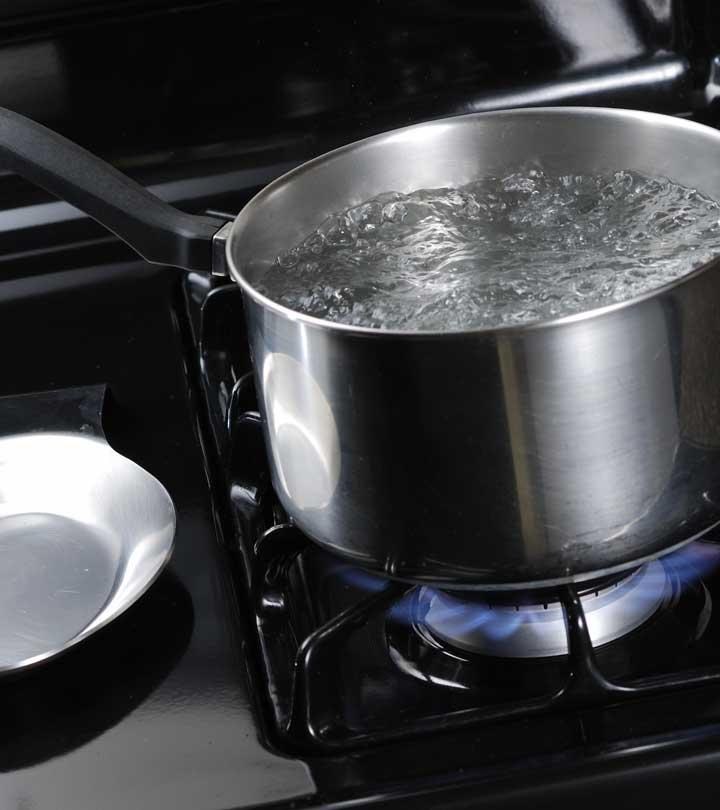
Boiling is probably the easiest and most common method to have clean and safe water for consumption. Find a heating source and a suitable container for boiling. Wait for a few minutes until the water comes to a rolling boil. For good measure, the Red Cross and FEMA suggest boiling the water for one more minute to kill bacteria, viruses, and parasites.

Image source: Stylecraze.com

2. Iodine

This solution can be found in most first aid kits. A common disinfectant for wounds, this can also be used to treat contaminated water. For each quart of water, use five drops of iodine. However, use up to ten drops if the water is noticeably dark. After treating the water with iodine, wait up to an hour before consuming.

3. Unscented bleach

This is another common household cleaning solution that can be used to purify water during emergency situations. To treat contaminated water, use 5% unscented bleach and add 1/8 of a teaspoon for a gallon of water. Shake the container and wait for an hour before drinking. If the water is still dark after the treatment, use filters before drinking.

Image source: Instructables.com

Water is essential for a person's survival. Knowing these water purification methods can save lives especially in emergency situations.

Captain Martin Lloyd Sanders is an expert in biological safety, field medical operations, biosecurity, occupational safety and health, infectious disease epidemiology, environmental health services, and occupational health and wellness programs. Visit this page for more updates on his field of work and study.


Thursday, May 31, 2018

Cdc Threat Levels For Antibiotic And Antimicrobial Resistant Threats

The Center for Disease Control and Prevention or CDC determined three threat levels for the outbreak of antibiotic and antimicrobial resistant diseases. As their names suggest, these diseases have the ability to resist the effects of drugs and evolve new strains that are resilient to current drugs. The following are the threat levels:

Image source: sputniknews.com


The lowest threat level is dubbed “concerning,” which has a threat score of 3/5. This threat level is for bacteria with low antibiotic resistance. The bacteria also have multiple therapeutic options for resistant infections. Nevertheless, these pathogens can cause severe illness and thus require monitoring and rapid incident response.

The next level is labeled “serious,” with a score of 4/5. These threats have reasonable availability of therapeutic agents or several other reasons which make them considerably worse than concerning. These are diseases that can only worsen and need ongoing public health monitoring, and evoke preventive measures.

The highest threat level is “urgent,” with a score of 5/5. Urgent threats are high-consequence antibiotic resistant threats due to risks identified by the CDC across several criteria. This disease may not be widespread but have the potential of infecting a lot of people in a given area. This threat requires public health attention to identify infections and to limit transmission.

Image source: cdc.gov

Captain Martin Lloyd Sanders, Ph.D., formally held the position of Director for Safety, Environmental Compliance and Emergency Management in Federal Occupational Health (FOH/PSC). He is a multi-awarded scientist and US Army veteran who has been deeply involved in biosafety and biosecurity issues both here and abroad. To know more about the CDC and its procedures, visit this website.